
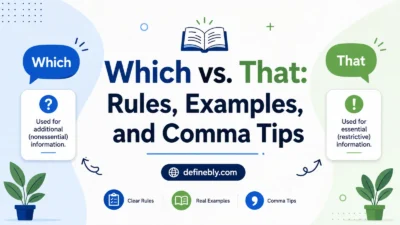
Which Vs. That: Rules, Examples, And Comma Tips
Which and that both introduce information about a noun. In edited American English, use that for essential information and which for extra…
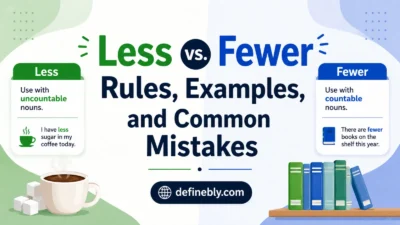
Less Vs. Fewer: Rules, Examples, And Common Mistakes
Less and fewer both point to a smaller amount, but they are not used the same way. Use fewer when you mean a smaller number of separate things…
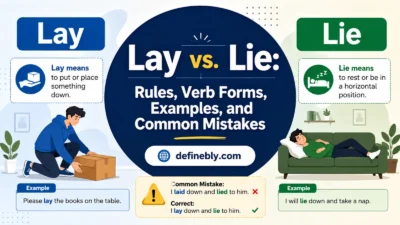
Lay Vs. Lie: Rules, Verb Forms, Examples, And Common Mistakes
Lay means to put or place something down. It needs an object. Lie means to recline, rest, or be in a flat position. It does not need an…

Who Vs. Whom: Rules, Examples, And Easy Grammar Test
Who and whom both refer to people, but they do different jobs in a sentence. Use who when the person is the subject, meaning the person doing…
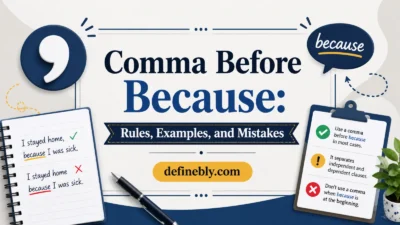
Comma Before Because: Rules, Examples, And Common Mistakes
You usually do not need a comma before because. Correct: The because clause gives the reason. Since that reason is essential to the sentence,…
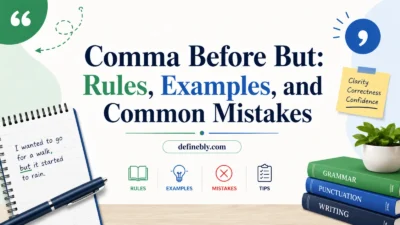
Comma Before But: Rules, Examples, And Common Mistakes
Use a comma before but when but joins two complete thoughts. Example: Do not use a comma before but when it joins only two words, two phrases,…
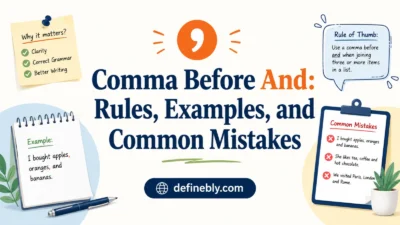
Comma Before And: Rules, Examples, And Common Mistakes
Use a comma before and when and joins two complete thoughts. Example: You may also use a comma before and in a list of three or more items.…
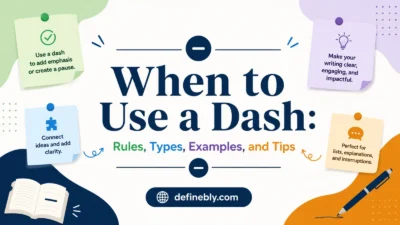
When To Use A Dash: Rules, Types, And Examples
A dash is used to create a break in a sentence, add emphasis, insert extra information, show interruption, or mark a range. The two main…
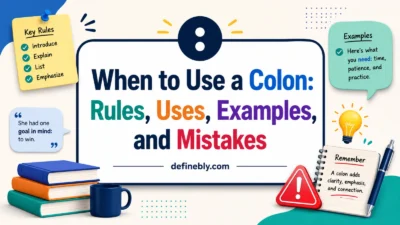
When To Use A Colon: Rules, Uses, And Examples
Use a colon when the first part of a sentence introduces, explains, names, or points to what comes next. A colon is a forward-looking…

What Is A Semicolon Used For? Rules, Uses, And Examples
A semicolon is used to connect closely related complete thoughts or to separate items in a complex list. It is stronger than a comma but less…