Adrian WellsonAugust 28, 2026 Madam vs. Madame: What’s the Real Difference? Madam is the standard English word — used for polite formal address, official titles, and certain specialized meanings. Madame is the French…
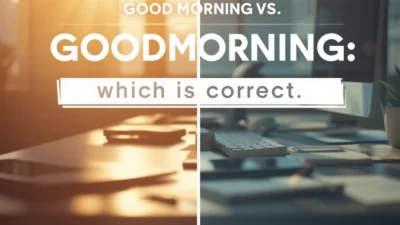
WORD CONFUSION3 Min Read Adrian WellsonJuly 9, 2026 Good Morning Vs. Goodmorning: Which Is Correct? If you’re wondering whether to write good morning or goodmorning, the answer is simple: Good morning is the correct spelling.…
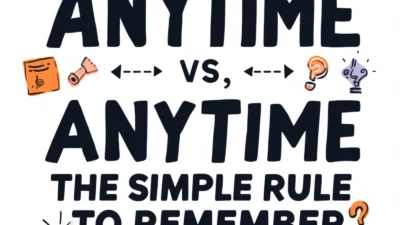
WORD CONFUSION4 Min Read Adrian WellsonJuly 9, 2026 Anytime Vs. Any Time: The Simple Rule To Remember Quick Answer Use anytime when you mean “whenever” and no preposition comes before it. Use any time when you mean an amount of time…
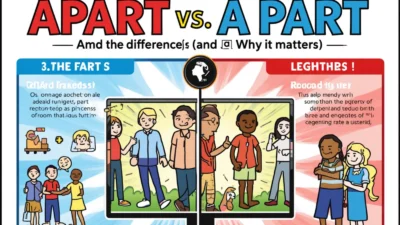
WORD CONFUSION7 Min Read Adrian WellsonJuly 9, 2026 Apart vs. A Part: The Difference (And Why It Matters) Apart (one word) means separated, distant, or different. A part (two words) means a piece, portion, or share of something larger. A single…
WORD CONFUSION8 Min Read Adrian WellsonJuly 9, 2026 Into vs. In To: The Simple Rule for Getting It Right Into (one word) is a preposition showing movement inside something, a collision, a transformation, or deep engagement with something. In to…
WORD CONFUSION6 Min Read Adrian WellsonJuly 9, 2026 Already vs. All Ready: The Simple Difference Explained Already (one word) is an adverb about time — it means something happened before now, by a certain point, or sooner than expected. All ready…
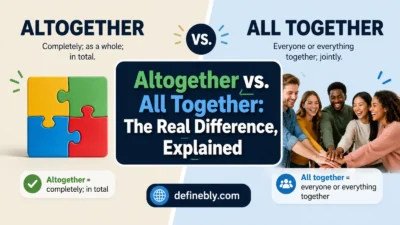
WORD CONFUSION4 Min Read Adrian WellsonJuly 7, 2026 Altogether vs. All Together: The Simple Way to Know Which “Altogether” and “all together” sound exactly the same when you say them out loud. That’s the whole problem. On…
WORD CONFUSION6 Min Read Adrian WellsonJune 30, 2026 Everyday vs. Every Day: The Simple Rule That Settles It By the Word-Choice Desk · June 30, 2026 Everyday (one word) is an adjective meaning ordinary or routine, and it sits directly before a noun:…