Adrian WellsonJuly 31, 2026 Liar vs. Lier: What’s the Real Difference? If you mean someone who tells lies, the word is liar — spelled with -ar, not -er. Lier is a real but rare and largely archaic word meaning…
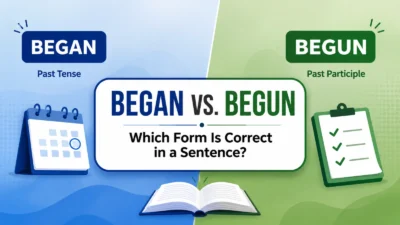
Grammar6 Min Read Adrian WellsonJuly 28, 2026 Began vs. Begun: Which Form Is Correct in a Sentence? Began is the simple past tense of begin. Use it when no helping verb is present: The show began at eight. Begun is the past participle. It…
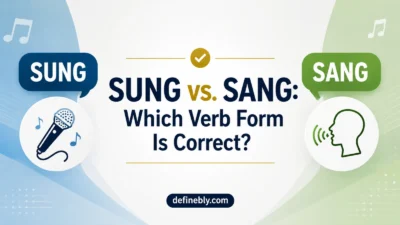
Grammar5 Min Read Adrian WellsonJuly 28, 2026 Sung vs. Sang: Which Verb Form Is Correct? Sang is the simple past tense of sing. Use it when there is no helping verb: She sang at the ceremony. Sung is the past participle. Use it…
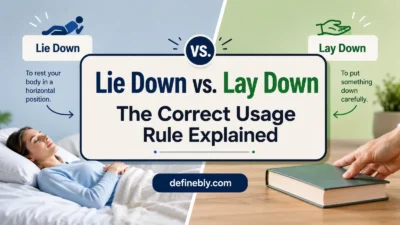
Grammar7 Min Read Adrian WellsonJuly 26, 2026 Lie Down vs. Lay Down: The Correct Usage Rule Explained Lie down means to recline — the subject does this to itself, with no object. Lay down means to place something — the subject does this to an…
GRAMMAR CONFUSION7 Min Read Adrian WellsonJuly 21, 2026 Whoever vs. Whomever: Which Is Correct? Whoever is the subject form — it does the action. Whomever is the object form — it receives the action. The test is simple and always works:…
GRAMMAR CONFUSION7 Min Read Adrian WellsonJuly 21, 2026 Neither Nor vs. Neither Or: Which Is Correct? Neither…nor is the only correct form. Neither…or is always wrong — not informal, not casual, but a straightforward grammar error…
GRAMMAR CONFUSION7 Min Read Adrian WellsonJuly 20, 2026 Whether vs. Whether or Not: What’s Correct in US English Whether alone is the right choice in most sentences. The phrase whether or not is required only when the sentence means “regardless of…
GRAMMAR CONFUSION7 Min Read Adrian WellsonJuly 20, 2026 Hanged vs. Hung: The Simple Rule for Correct Usage Hanged applies to one situation only: a person who died by hanging — execution or suicide. Hung applies to everything else: pictures,…
GRAMMAR CONFUSION6 Min Read Adrian WellsonJuly 18, 2026 Woman vs. Women: Which Form Is Correct? Woman is singular — one person. Women is plural — two or more. They are not interchangeable, they are not style variants, and there is no…
GRAMMAR CONFUSION7 Min Read Adrian WellsonJuly 18, 2026 Anyway vs. Anyways: Which One Is Correct? Anyway is the standard form in American English. It belongs in formal writing, professional communication, academic prose, and everyday…