
Madam vs. Madame: What’s the Real Difference?
Madam is the standard English word — used for polite formal address, official titles, and certain specialized meanings. Madame is the French…
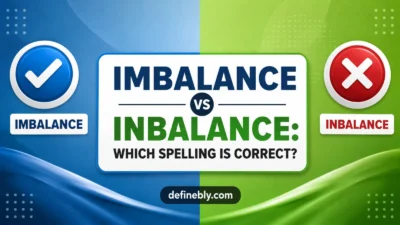
Imbalance vs. Inbalance: Which Spelling Is Correct?
Imbalance is the correct spelling — the only one recognized in any standard English dictionary. Inbalance is not a word. It is a misspelling…
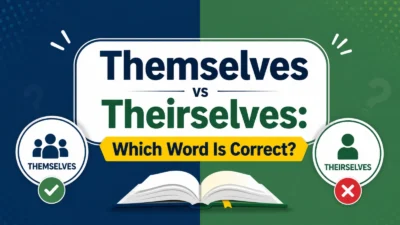
Themselves vs. Theirselves: Which Is Correct?
Themselves is the only standard English reflexive pronoun. Theirselves is nonstandard — it shows up in casual speech and some dialects, but it…
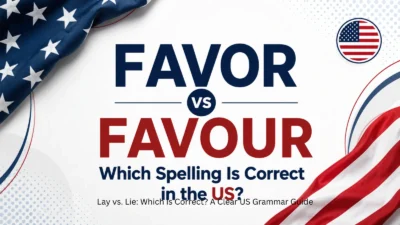
Favor vs. Favour: Which Spelling Is Correct?
Favor is correct in American English. Favour is correct in British, Australian, and most Commonwealth English. They’re the same word,…

Lay vs. Lie: Which Is Correct?
Lie means to recline — the subject does this to itself, with no object. Lay means to place something — the subject does this to an object. I…
Sang vs. Sung: Which Is Correct?
Sang is the simple past tense of sing. Use it when no helping verb is present: She sang at the ceremony. Sung is the past participle. Use it…

Leaped vs. Leapt: Which Past Tense Should You Use?
Both are correct. Leaped is the standard past tense in American English. Leapt is more common in British English and appears in American…

Dreamed vs. Dreamt: Which Past Tense Is Correct?
Both are correct. Dreamed is the standard past tense in American English. Dreamt is the traditional irregular form used more often in British…
Liar vs. Lier: What’s the Real Difference?
If you mean someone who tells lies, the word is liar — spelled with -ar, not -er. Lier is a real but rare and largely archaic word meaning…
Began vs. Begun: Which Form Is Correct in a Sentence?
Began is the simple past tense of begin. Use it when no helping verb is present: The show began at eight. Begun is the past participle. It…