

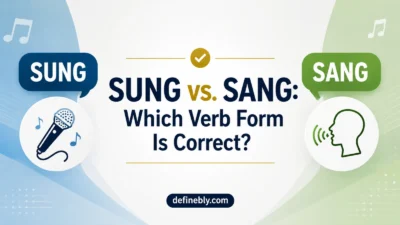
Sung vs. Sang: Which Verb Form Is Correct?
Sang is the simple past tense of sing. Use it when there is no helping verb: She sang at the ceremony. Sung is the past participle. Use it…

Lie Down vs. Lay Down: The Correct Usage Rule Explained
Lie down means to recline — the subject does this to itself, with no object. Lay down means to place something — the subject does this to an…

Whoever vs. Whomever: Which Is Correct?
Whoever is the subject form — it does the action. Whomever is the object form — it receives the action. The test is simple and always works:…
Neither Nor vs. Neither Or: Which Is Correct?
Neither…nor is the only correct form. Neither…or is always wrong — not informal, not casual, but a straightforward grammar error…
Whether vs. Whether or Not: What’s Correct in US English
Whether alone is the right choice in most sentences. The phrase whether or not is required only when the sentence means “regardless of…

Hanged vs. Hung: The Simple Rule for Correct Usage
Hanged applies to one situation only: a person who died by hanging — execution or suicide. Hung applies to everything else: pictures,…
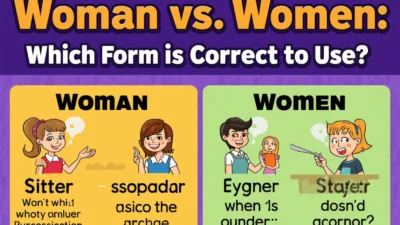
Woman vs. Women: Which Form Is Correct?
Woman is singular — one person. Women is plural — two or more. They are not interchangeable, they are not style variants, and there is no…

Anyway vs. Anyways: Which One Is Correct?
Anyway is the standard form in American English. It belongs in formal writing, professional communication, academic prose, and everyday…
In Regard vs. In Regards: Which One Is Correct?
Use in regard to — no s. When you are introducing a topic, subject, or matter, the correct form is the singular: in regard to your…

Premise vs. Premises: Which One Fits Your Sentence?
Premise (no s) refers to a single idea, assumption, or statement used as the basis of an argument. Premises (with s) refers either to multiple…