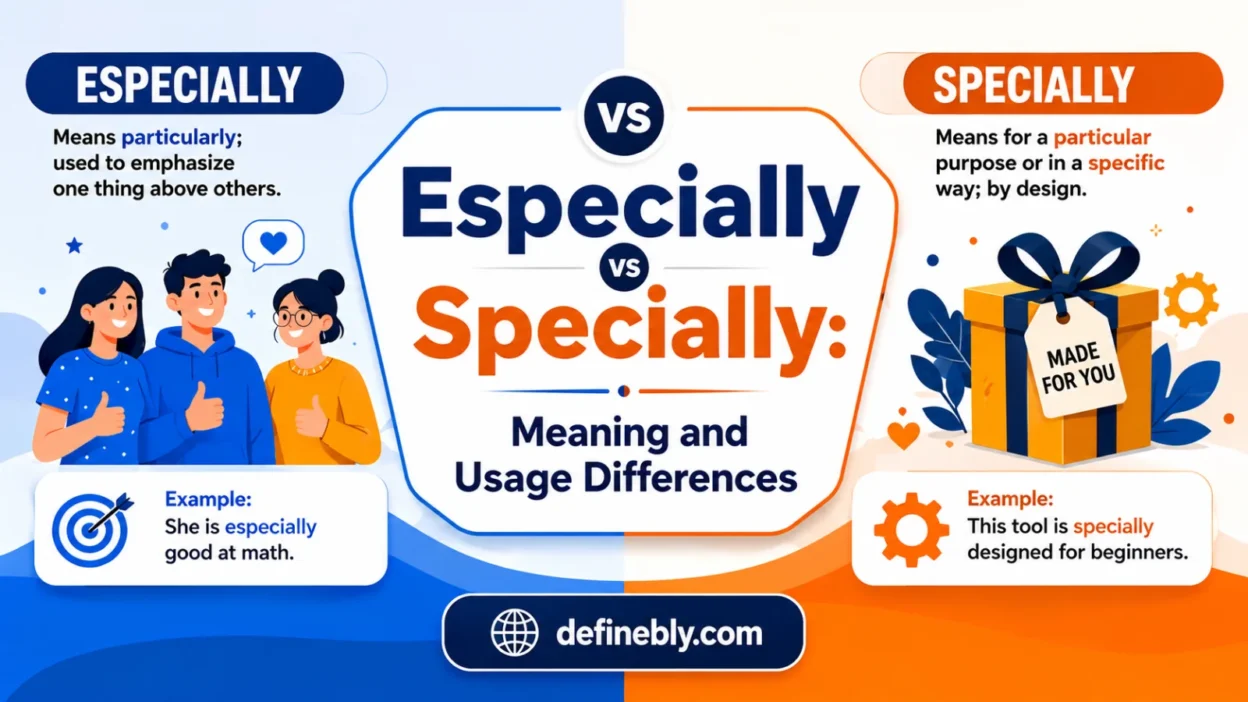
“Especially” and “specially” are closely related words that many English speakers confuse because they both come from the word “special.”
Although the meanings overlap slightly, modern American English usually separates them clearly:
- Especially is mainly used for emphasis.
- Specially is mainly used for purpose, preparation, or design.
Choosing the wrong one can make a sentence sound awkward or unnatural, especially in professional writing.
Quick Answer
Use especially to mean:
- particularly
- more than others
- above all
Use specially to mean:
- for a specific purpose
- intentionally prepared
- custom-made
Examples
- I love desserts, especially chocolate cake.
- The software was specially designed for teachers.
The Main Difference In One Sentence
- Especially = emphasis
- Specially = specific purpose
That single distinction solves most usage problems.
Why People Confuse Especially And Specially
These words are confusing because:
- they come from the same root word
- both function as adverbs
- they sometimes overlap in meaning
- casual speech occasionally treats them as interchangeable
However, standard American English usually prefers a clearer distinction.
Especially Vs Specially At A Glance
| Situation | Correct Word | Why |
|---|---|---|
| Showing preference or emphasis | especially | Highlights something more strongly |
| Describing a custom-made object | specially | Focuses on intentional design |
| Talking about favorite things | especially | Means “particularly” |
| Discussing preparation for a purpose | specially | Means “specifically created” |
| Adding emotional emphasis | especially | Sounds natural in conversation |
| Manufacturing or technical design | specially | Emphasizes purpose or customization |
What Does Especially Mean?
Especially means:
- particularly
- notably
- more than usual
- above all others
It adds emphasis to one thing compared to the rest.
Common Uses Of Especially
- especially important
- especially useful
- especially difficult
- especially popular
Examples
- I enjoy traveling, especially during autumn.
- The movie was especially interesting to science-fiction fans.
- She was especially proud of her graduation speech.
In each example, one thing receives stronger emphasis.
What Does Specially Mean?
Specially means:
- for a particular purpose
- intentionally arranged
- custom-made
- specifically prepared
It focuses on design, preparation, or intention.
Common Uses Of Specially
- specially designed
- specially prepared
- specially trained
- specially made
Examples
- The wheelchair ramp was specially designed for accessibility.
- The chef specially prepared a gluten-free menu.
- These shoes were specially made for marathon runners.
Here, the focus is intentional preparation or customization.
Especially For Vs Specially For
This is one of the most common areas of confusion.
Especially For
Used for emphasis or preference.
Example:
- This guide is especially helpful for beginners.
Meaning: beginners benefit more than others.
Specially For
Used for intentional preparation or creation.
Example:
- This guide was specially written for beginners.
Meaning: it was intentionally created for them.
Can Especially And Specially Ever Overlap?
Sometimes, yes.
In informal English, especially and specially may occasionally sound acceptable in similar contexts.
Example:
- A specially prepared meal
- An especially prepared meal
However, native speakers strongly prefer:
- specially prepared
because preparation implies intentional action.
Modern American English usually keeps the distinction clear.
Grammar And Usage Patterns
Both words are adverbs, but they modify sentences differently.
Especially
Usually modifies:
- adjectives
- adverbs
- preferences
- emotional emphasis
Examples:
- especially beautiful
- especially difficult
- especially exciting
Specially
Usually modifies:
- preparation
- design
- manufacturing
- intentional action
Examples:
- specially engineered
- specially selected
- specially trained
Common Mistakes And Quick Fixes
Using Specially For Preference
Less natural:
- I specially like this restaurant.
Better:
- I especially like this restaurant.
Why? The sentence expresses preference, not intentional design.
Using Especially For Custom Design
Less accurate:
- The chair was especially designed for back support.
Better:
- The chair was specially designed for back support.
Why? The design was intentional and purpose-driven.
Sentence Correction Practice
- ❌ These shoes were especially made for runners.
✔ These shoes were specially made for runners. - ❌ I specially enjoy mystery novels.
✔ I especially enjoy mystery novels. - ❌ The room was especially prepared for the ceremony.
✔ The room was specially prepared for the ceremony.
Real-World Usage Examples
Everyday Conversation
- I especially love coffee in the morning.
- She especially enjoys live music.
Business And Marketing
- The package was specially created for premium customers.
- The software was specially developed for small businesses.
Education
- This lesson is especially useful for new learners.
- The classroom was specially equipped for science experiments.
Healthcare
- The treatment was specially designed for children.
- Nutrition is especially important during recovery.
Memory Tricks To Remember The Difference
Especially
Think:
- emphasis
- preference
- stronger feeling
Specially
Think:
- specific purpose
- special preparation
- custom-made
Simple shortcut:
- especially = particularly
- specially = specifically made
Synonyms And Related Words
Especially
- particularly
- notably
- mainly
- above all
Specially
- specifically
- intentionally
- purposely
- custom-made
Word Origins And Language Development
Both words developed from the adjective “special.”
Over time:
- especially evolved toward emphasis and preference
- specially evolved toward intentional purpose and preparation
Modern English still largely follows this distinction.
FAQ
What is the difference between especially and specially?
Especially emphasizes something more strongly, while specially refers to something intentionally made or prepared for a purpose.
Can especially and specially be interchangeable?
Sometimes in casual speech, but careful writing usually keeps them separate.
Is “specially designed” correct?
Yes. “Specially designed” is the standard phrase because it refers to intentional design for a purpose.
Should I say especially for or specially for?
Use “especially for” for emphasis and “specially for” for intentional preparation.
Which word is more common in everyday English?
Especially is more common in general conversation and everyday writing.
How can I remember especially vs specially?
Think:
- especially = emphasis
- specially = specific purpose
Conclusion
“Especially” and “specially” are closely connected words, but they usually serve different purposes in modern English.
- Use especially for emphasis, preference, or importance.
- Use specially for intentional design, preparation, or customization.
Remember:
- especially = particularly
- specially = specifically made
Once you connect emphasis with especially and purpose with specially, choosing the correct word becomes much easier in both formal and everyday writing.