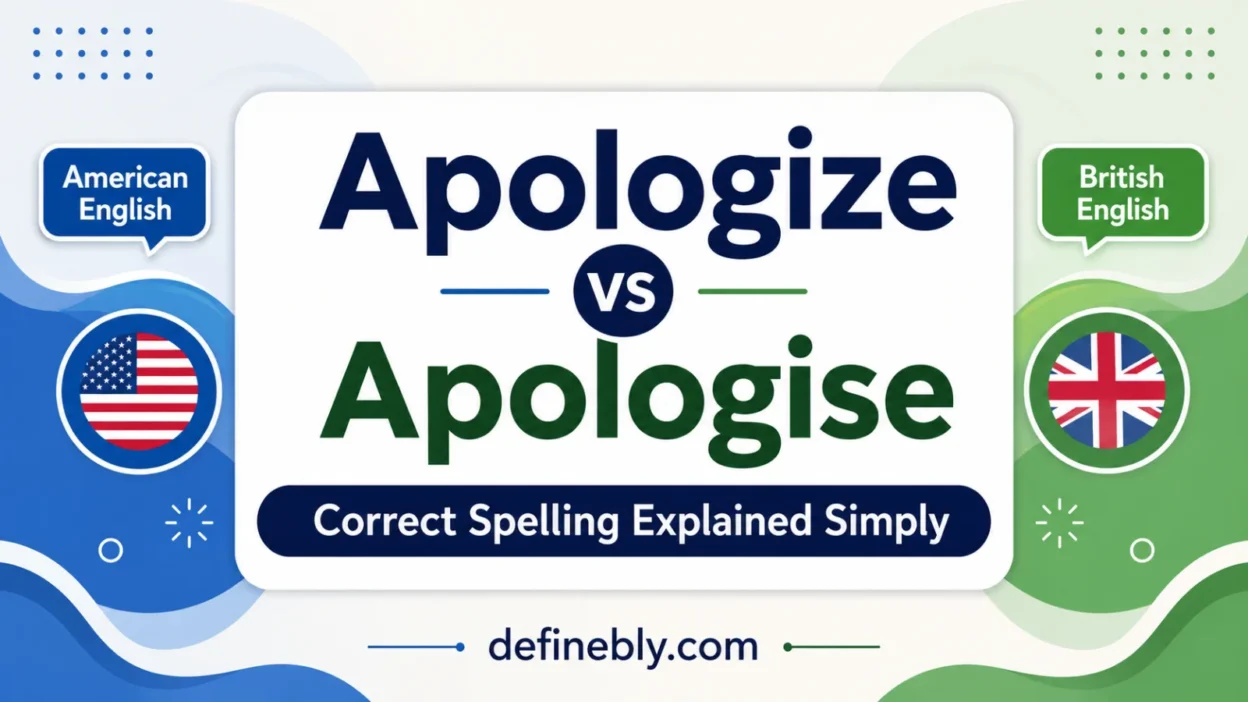
“Apologize” and “apologise” are two correct spellings of the same verb. The difference is not meaning but spelling convention based on regional English standards. American English prefers “apologize,” while British English and many Commonwealth countries prefer “apologise.”
Which Spelling Is Correct?
Both spellings are correct in English. The choice depends entirely on which version of English you are using.
- American English: apologize
- British English: apologise
Neither is wrong; consistency with your audience is what matters.
Why Are There Two Spellings?
The difference comes from historical spelling systems in English. Two major conventions developed over time:
- American English standardized many verbs with “-ize” endings
- British English often prefers “-ise” endings
This is a spelling convention, not a difference in meaning or pronunciation.
Apologize vs Apologise In Style Guides
Different writing standards reinforce these preferences:
- AP Style (United States): prefers “-ize” endings → apologize
- Chicago Manual of Style: also favors “-ize”
- Oxford Style (UK): prefers “-ise” → apologise
- British Council English: uses “-ise” in general UK usage guidance
These standards influence publishing, journalism, and academic writing.
How To Choose The Correct Form
The correct choice depends on your audience and writing context:
- If writing for a US audience → use apologize
- If writing for UK, Australia, or Commonwealth audiences → use apologise
- If writing globally → choose one style and stay consistent throughout
Consistency is more important than preference.
Examples In Real Usage
American English (apologize):
- I want to apologize for the mistake.
- We sincerely apologize for the inconvenience.
- He decided to apologize after the meeting.
British English (apologise):
- I must apologise for the delay.
- She will apologise in person.
- They apologised for the misunderstanding.
Related Spelling Patterns You Should Know
The same rule applies to many verbs:
- organize / organise
- realize / realise
- recognize / recognise
- criticize / criticise
These follow the same regional spelling pattern as “apologize/apologise.”
Common Mistakes
One of the most common errors is mixing both forms in the same document. This creates inconsistency and weakens writing quality.
Another mistake is assuming one version is “incorrect.” Both are valid; the issue is audience alignment, not correctness.
Quick Decision Rule
Use this simple rule:
- US audience → always -ize
- UK/Commonwealth audience → always -ise
- Mixed/global audience → pick one and stay consistent
FAQs
Is “apologise” incorrect in American English?
No, it is understood in American English, but it is not the standard form used in US writing.
Is “apologize” British or American?
“Apologize” is the American English spelling and is preferred in US style guides.
Why does British English use “-ise” instead of “-ize”?
British English adopted “-ise” as the preferred convention in most modern usage guides, although both forms exist historically.
Can I switch between apologize and apologise in the same document?
No, you should not mix spellings. Choose one style and maintain consistency throughout your writing.
Which spelling is used in formal writing?
It depends on the region. US formal writing uses “apologize,” while UK formal writing uses “apologise.”
Is there a pronunciation difference?
No, both spellings are pronounced the same way.
Which is more common globally?
Both are widely used depending on region; neither is globally dominant.
Should I follow AP or Oxford spelling rules?
Follow AP (American) if writing for US audiences and Oxford-style conventions if writing for UK audiences.
Are there other words like this?
Yes, many verbs follow the same pattern, such as organize/organise and realize/realise.
What is the safest choice for SEO writing?
Match the spelling to your target audience’s regional English and remain consistent across the page.
Conclusion
“Apologize” and “apologise” are both correct spellings of the same word. The difference lies in regional English standards rather than meaning or correctness. For clear, professional writing, always match your spelling choice to your audience and maintain consistency throughout your content.