Judgment vs. Judgement: Which Spelling Is Correct?
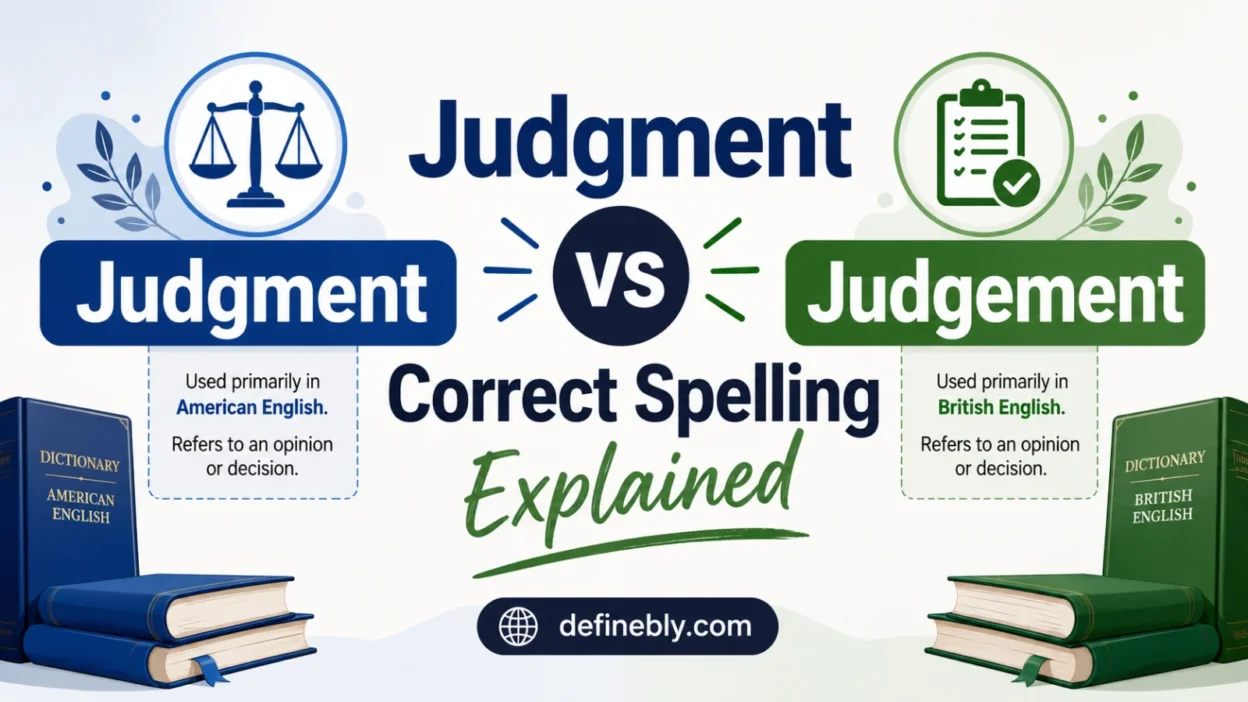
Judgment and judgement are both correct spellings of the same English word. They have the same meaning and pronunciation, but their preferred usage differs by region.
In American English, judgment is the standard spelling. In British English, judgement is common, although judgment is also widely accepted, particularly in legal writing.
The main difference is spelling preference, not meaning. If you are writing for an American audience, use judgment. If you are following traditional British spelling conventions, judgement is also appropriate.
Quick Answer: Judgment or Judgement?
Both spellings are correct, but the preferred form depends on the variety of English you are using.
| Spelling | Usage | Example |
|---|---|---|
| Judgment | Standard American English | I trust your judgment. |
| Judgement | Common British English | I trust your judgement. |
Remember:
- Use judgment in American English.
- Use judgement when following British English conventions.
- Both words have the same meaning and pronunciation.
- Keep your spelling consistent throughout your writing.
What Does Judgment or Judgement Mean?
Judgment (or judgement) is a noun that refers to the ability to make decisions, form opinions, or reach conclusions after considering information.
It can also describe an official decision made by a court or another authority.
The word has several common uses:
1. The Ability To Make Decisions
It refers to someone’s ability to think carefully and make sensible choices.
Example: She showed excellent judgment when handling the difficult situation.
2. An Opinion Or Assessment
It can describe an opinion formed about a person, situation, or event.
Example: You should not make a judgment about someone without knowing the facts.
3. An Official Court Decision
In legal contexts, it refers to a decision formally made by a judge or court.
Example: The court issued its final judgment in the case.
All three meanings apply to both spellings.
Why Are There Two Spellings?
The difference between judgment and judgement developed through historical spelling variations in English.
The word comes from Old French jugement, which entered English through Middle English. Over time, different spelling conventions developed in British and American English.
American English standardized judgment without the additional e. British English commonly retained the spelling judgement.
However, this distinction is not absolute. British English also uses judgment, particularly in legal and formal contexts.
Unlike some American and British spelling differences, the two forms do not represent different meanings or pronunciations.
Judgment vs. Judgement in American and British English
The easiest way to choose between these spellings is to consider your target audience.
American English: Judgment
In the United States, judgment is the standard spelling in everyday, academic, business, and legal writing.
Examples:
- I trust your judgment when making important decisions.
- The judge delivered the final judgment.
- Good judgment comes from experience.
- His judgment was questioned during the investigation.
- She demonstrated sound judgment under pressure.
American dictionaries, including Merriam-Webster, list judgment as the standard spelling.
British English: Judgement
In British English, judgement is a common spelling in general writing.
Examples:
- The committee questioned his judgement.
- She showed excellent judgement during the meeting.
- His judgement of the situation was accurate.
- It was a poor judgement call.
- You should use your own judgement before deciding.
However, judgment is also accepted in British English and is particularly established in legal terminology.
Judgment vs. Judgement in Legal Writing
Both spellings appear in English-language legal writing, but judgment is especially important in legal contexts.
In American law, judgment is the standard spelling used in court rules, legal documents, judicial decisions, and case law.
British legal writing also frequently uses judgment, even though judgement remains common in general British English.
Examples:
- The court entered a final judgment.
- The defendant challenged the judgment.
- The judge delivered a written judgment.
- The judgment was recorded in the court documents.
If you are writing legal material, follow the spelling used by the relevant court, jurisdiction, or legal style guide.
Judgment or Judgement: How To Choose the Correct Spelling
Use the following guidelines to select the appropriate spelling.
1. For American English
Choose judgment when writing for readers in the United States.
Example: Your judgment should be based on reliable information.
2. For British English
Choose judgement if you are following traditional British spelling conventions.
Example: I respect your judgement in this matter.
3. For Academic and Professional Writing
Follow the spelling conventions required by your institution, publisher, or style guide.
4. For Legal Writing
Use judgment when following American legal conventions. In other jurisdictions, check the relevant legal terminology and style requirements.
5. For SEO Content
Choose the spelling that matches your target audience and search intent. For a US-focused website, judgment is generally the better choice. For UK-focused content, judgement may be more appropriate.
Most importantly, do not switch between the two spellings without a specific reason.
Judgment vs. Judgement: Example Sentences
The following examples show how both spellings work in everyday and formal writing.
Examples With Judgment
- I trust her judgment when making difficult decisions.
- The judge delivered the final judgment yesterday.
- Good judgment is important in professional life.
- His judgment about the situation was incorrect.
- She used her best judgment to solve the problem.
- The company questioned his business judgment.
- You should not pass judgment without knowing the facts.
Examples With Judgement
- I respect your judgement about the situation.
- She demonstrated excellent judgement under pressure.
- His judgement was influenced by personal opinions.
- The committee questioned her judgement.
- You need good judgement to make responsible decisions.
- He showed poor judgement during the discussion.
- Her judgement of character is usually accurate.
Both versions are grammatically correct. The spelling changes, but the meaning remains the same.
Related Words and Expressions
Several common expressions use judgment or judgement. Their spelling follows the same regional preferences.
| Expression | Meaning |
|---|---|
| Good judgment | The ability to make sensible decisions |
| Poor judgment | The inability to make sensible decisions |
| Pass judgment | To form or express an opinion about someone or something |
| Value judgment | An opinion based on personal beliefs or values |
| Judgment call | A decision based on personal assessment |
| Judgmental | Too quick to criticize or form negative opinions |
| Court judgment | An official decision made by a court |
Important: The related adjective is normally spelled judgmental in both American and British English. The spelling judgemental is also occasionally encountered, but judgmental is the standard form.
Common Mistakes to Avoid
Understanding the difference between these spellings helps prevent common writing errors.
1. Assuming Judgement Is Always Incorrect
Judgement is not a misspelling. It is a recognized British English spelling.
2. Assuming Judgment Is Only American
Although judgment is standard in American English, it is also used in British English, particularly in legal writing.
3. Mixing Both Spellings
Using judgment in one paragraph and judgement in another can make your writing inconsistent. Choose one spelling convention and follow it.
4. Changing the Pronunciation
Both spellings have the same pronunciation. The additional e does not create a different sound.
5. Confusing Judgment With Judgmental
Judgment is a noun, while judgmental is an adjective.
Examples:
- Her judgment was correct.
- He made a judgmental comment.
Frequently Asked Questions
Is Judgment or Judgement Correct?
Both are correct. Judgment is the standard American English spelling, while judgement is commonly used in British English.
Is Judgement Incorrect in American English?
No. It is recognizable and occasionally used, but judgment is the standard and preferred spelling in American English.
Is Judgment Used in British English?
Yes. British English accepts judgment, especially in legal writing. However, judgement remains common in general British usage.
Why Does Judgment Have No E?
The spelling judgment developed as a standardized form without the additional e. American English adopted this form as its standard spelling, while British English commonly retained judgement.
Do Judgment and Judgement Have Different Meanings?
No. Both spellings have exactly the same meanings. They can refer to decision-making ability, an opinion, or an official court decision.
Are Judgment and Judgement Pronounced the Same Way?
Yes. Both words have the same pronunciation. The spelling difference does not affect how the word is spoken.
Is Judgment the Correct Legal Spelling?
In American legal writing, yes. Judgment is the standard legal spelling. It is also widely used in British legal documents, although conventions can vary by jurisdiction.
What Is the Difference Between Judgment and Judgemental?
Judgment is a noun that refers to a decision, opinion, or ability to make decisions. Judgmental is an adjective describing someone who tends to criticize others.
Should I Use Judgment or Judgement in a US-Focused Article?
Use judgment. It is the standard American English spelling and is the appropriate choice for content targeting readers in the United States.
Is Judgment or Judgement More Common Worldwide?
Judgment is widely used in American English and international legal and professional contexts. Judgement is also established in British English and other varieties that follow British spelling conventions. Neither form is universally preferred across all English-speaking regions.
Can I Use Judgment and Judgement in the Same Document?
Generally, no. Choose the spelling that matches your audience or style guide and use it consistently. Different spellings may be appropriate when quoting an original source or reproducing an official document.
Conclusion
Judgment and judgement are both correct spellings with the same meaning and pronunciation. The difference comes down to regional spelling conventions.
Use judgment for American English because it is the standard US spelling. Use judgement when following traditional British English conventions, although judgment is also accepted in the UK.
For professional, academic, and legal writing, follow the relevant style guide or regional standard. The most important rule is to remain consistent throughout your document.
Easy rule to remember: American English = Judgment; British English = Judgement.