Apologize vs. Apologise: Meaning, Spelling, And Key Differences
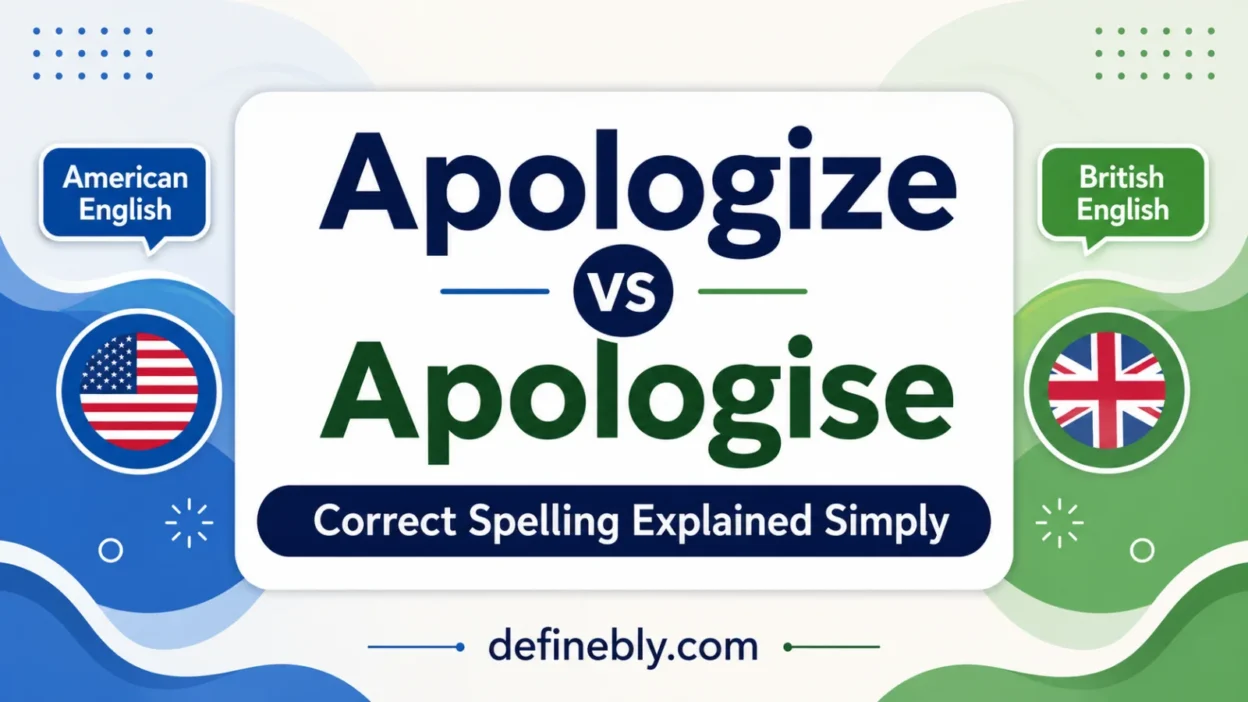
Apologize and apologise are two correct spellings of the same English verb. Both mean to express regret or say that you are sorry for something.
The difference is regional spelling preference:
- Apologize is the standard spelling in American English.
- Apologise is commonly preferred in British English and several other varieties of English.
Neither spelling is universally incorrect. The right choice depends on your audience and the spelling convention you follow.
Quick Answer: Apologize vs. Apologise
| Word | Preferred In | Meaning | Example |
|---|---|---|---|
| Apologize | American English | To express regret or say sorry | I apologize for the mistake. |
| Apologise | British English | To express regret or say sorry | I apologise for the mistake. |
Both words have the same meaning, pronunciation, and grammatical function. Only the spelling changes.
If you are writing for a US audience, choose apologize. If you are following a British English style that uses -ise spellings, choose apologise.
What Does Apologize Mean?
Apologize is a verb that means to express regret, acknowledge a mistake, or tell someone that you are sorry for something you have done.
It is the preferred spelling in American English.
Examples:
- I want to apologize for being late.
- The company issued a statement to apologize for the inconvenience.
- He decided to apologize after realizing his mistake.
- You should apologize if your words hurt someone.
- We sincerely apologize for the delay.
In each sentence, apologize describes the act of expressing regret or taking responsibility for something.
Common Forms Of Apologize
The related verb forms follow the same American English spelling:
| Verb Form | Example |
|---|---|
| Base form | apologize |
| Third-person singular | apologizes |
| Present participle | apologizing |
| Simple past | apologized |
| Past participle | apologized |
Examples:
- She always apologizes when she makes a mistake.
- He is apologizing for his behavior.
- They apologized for the misunderstanding.
- The manager has apologized to the customers.
What Does Apologise Mean?
Apologise has exactly the same meaning as apologize. It is the preferred spelling in many British English writing conventions.
It means to express regret, admit a mistake, or say that you are sorry.
Examples:
- I must apologise for the delay.
- She decided to apologise in person.
- They apologised for the misunderstanding.
- The company issued a statement to apologise to its customers.
- He is apologising for his behavior.
The meaning and grammar do not change when you replace the American spelling with the British spelling.
Common Forms Of Apologise
The related verb forms use the -ise spelling:
| Verb Form | Example |
|---|---|
| Base form | apologise |
| Third-person singular | apologises |
| Present participle | apologising |
| Simple past | apologised |
| Past participle | apologised |
The main difference is the spelling pattern: apologize, apologizes, apologizing, apologized versus apologise, apologises, apologising, apologised.
Why Are There Two Spellings?
The difference between apologize and apologise comes from the development of regional English spelling conventions.
American and British English developed different preferences for certain words, including verbs ending in -ize and -ise.
In American English, -ize is the standard spelling in words such as:
- apologize
- organize
- realize
- recognize
- criticize
In British English, -ise is common in many words:
- apologise
- organise
- realise
- recognise
- criticise
However, British English is not limited to -ise. The -ize spelling is also accepted in some British dictionaries and style systems, including Oxford-style spelling.
Therefore, it is more accurate to say that apologize is the standard US preference, while apologise is a common UK preference rather than claiming that one spelling is correct everywhere in Britain.
Apologize vs. Apologise In American And British English
The choice between these spellings usually depends on the regional English standard you are following.
American English: Apologize
American English generally uses apologize.
Examples:
- I apologize for the confusion.
- We apologize for the inconvenience.
- She apologized to her colleague.
- The company apologizes for the error.
If you are writing for American readers, use apologize and its related forms throughout the document.
British English: Apologise
Many British English publications and writing conventions prefer apologise.
Examples:
- I apologise for the confusion.
- We apologise for the inconvenience.
- She apologised to her colleague.
- The company apologises for the error.
If you are following a British style that uses -ise, keep the same spelling pattern throughout your writing.
What About Australian And Other Commonwealth English?
Australian English commonly follows the -ise preference, so apologise is widely used.
Other Commonwealth varieties may also use -ise, although spelling preferences can vary by country, publication, and style guide.
When writing for a particular audience, follow that audience’s preferred dictionary or editorial style rather than assuming every country uses exactly the same convention.
Apologize vs. Apologise In Style Guides
Different dictionaries and style guides follow different spelling preferences.
| Writing Standard | Common Preference |
|---|---|
| American English | Apologize |
| AP Style | Apologize |
| Chicago style | Apologize |
| Oxford spelling | Apologize |
| Many British -ise styles | Apologise |
| Common Australian usage | Apologise |
One important distinction: British English does not have a single spelling rule that requires every writer to use -ise. Oxford-style British writing commonly uses -ize, while many other UK publications prefer -ise.
The safest approach is to follow the specific style guide required by your publication, school, employer, or client.
Related Spelling Patterns: -Ize vs. -Ise
Apologize and apologise are part of a larger group of words with regional spelling variations.
Here are some common examples:
| American English | Common British -ise Form |
|---|---|
| Organize | Organise |
| Realize | Realise |
| Recognize | Recognise |
| Criticize | Criticise |
| Standardize | Standardise |
| Modernize | Modernise |
| Legalize | Legalise |
| Prioritize | Prioritise |
These pairs generally have the same meaning. The difference is the spelling convention, not the definition.
Remember that not every English word ending in -ize has a standard -ise alternative. Follow established spellings rather than applying the pattern to every word.
How To Choose The Correct Spelling
Choosing between apologize and apologise is simple once you know your audience.
- For American readers: Use apologize.
- For British readers: Use the spelling preferred by your chosen UK style guide. Many publications use apologise, while Oxford-style writing uses apologize.
- For Australian readers: Apologise is commonly preferred.
- For international readers: Choose a consistent spelling convention and follow it throughout your content.
Consistency matters because switching between regional spelling systems can make an article or document look poorly edited.
For example, avoid using apologize in one paragraph and organise in another if you are following a consistent American English style.
Common Mistakes With Apologize And Apologise
Mistake 1: Assuming Apologise Is Always Incorrect
Incorrect: Apologise is not a real English word.
Correct: Apologise is a standard spelling used in many British English contexts.
Both spellings are valid. The difference is regional preference.
Mistake 2: Assuming Apologize Is Only American
Incorrect: British English never uses apologize.
Correct: Apologize is also accepted in British English, particularly in Oxford-style spelling.
The -ize ending is not exclusively American.
Mistake 3: Mixing Both Spelling Systems
Inconsistent: I apologize for the delay, and I will organise the meeting.
Consistent American English: I apologize for the delay, and I will organize the meeting.
Consistent British -ise style: I apologise for the delay, and I will organise the meeting.
Choose one spelling convention and use it consistently.
Mistake 4: Changing The Meaning
Incorrect: Apologize means something different from apologise.
Correct: Both words mean to express regret or say sorry.
The spelling changes, but the meaning and pronunciation remain the same.
Frequently Asked Questions
Is Apologize Or Apologise Correct?
Both are correct spellings. Apologize is the standard American English spelling, while apologise is commonly preferred in British English and Australian English.
Is Apologise Incorrect In American English?
Apologise is understandable to American readers, but apologize is the standard spelling in US English. Use apologize when writing for an American audience.
Is Apologize British Or American?
Apologize is the standard American spelling, but it is also accepted in British English under Oxford-style spelling conventions. It is not exclusively American.
Why Does British English Use Apologise Instead Of Apologize?
Many British English spelling conventions prefer the -ise ending in words such as apologise, organise, and recognise. However, some British style guides, including Oxford-style spelling, prefer -ize.
Can I Use Apologize And Apologise In The Same Document?
It is best not to mix the two forms in the same document unless you are quoting or discussing different spelling conventions. Choose one style and remain consistent.
Is There A Pronunciation Difference Between Apologize And Apologise?
No. Both spellings are pronounced the same way. The difference is purely written, not spoken.
What Is The Past Tense Of Apologize And Apologise?
The past tense of apologize is apologized. The past tense of apologise is apologised.
Examples:
- American English: She apologized for the mistake.
- British -ise style: She apologised for the mistake.
What Is The Difference Between Apologize, Apologizes, And Apologized?
These are different grammatical forms of the same verb:
- Apologize: Base form.
- Apologizes: Third-person singular present tense.
- Apologized: Simple past tense and past participle.
The British -ise equivalents are apologise, apologises, and apologised.
Which Spelling Is More Common Globally?
There is no single spelling preference shared by all English-speaking countries. Apologize is standard in the United States and Oxford-style writing, while apologise is common in British and Australian usage.
Should I Use AP Or Oxford Spelling Rules?
Use AP style when writing for publications that follow American AP conventions. Use Oxford-style spelling when your publication or institution requires it. The important point is to follow the relevant style guide consistently.
What Is The Best Spelling For SEO Writing?
Match the spelling to your target audience and the regional English standard of your website. For US-focused content, use apologize. For content following a British or Australian -ise convention, use apologise.
Conclusion
Apologize and apologise are two correct spellings of the same verb. Both mean to express regret or say sorry, and neither has a different pronunciation.
The main difference is regional spelling preference. Use apologize for standard American English and apologise when following a British or Australian -ise spelling convention.
The easiest rule to remember is: US English prefers -ize; many British and Australian writing styles prefer -ise. Choose the spelling that matches your audience and use it consistently.