Commonly Confused Words3 Min Read Adrian WellsonMay 20, 2026 Imply vs Infer: Clear Difference and Correct Usage Guide “Imply” and “infer” are often confused because they describe the same communication process from two different perspectives. The key…
Commonly Confused Words3 Min Read Adrian WellsonMay 20, 2026 Peek vs Peak vs Pique: Meaning, Difference, and Correct Usage Guide “Peek,” “peak,” and “pique” are three English words that sound the same but mean completely different things. They are homophones, which is…
Commonly Confused Words3 Min Read Adrian WellsonMay 20, 2026 Breath vs Breathe: Simple Difference and Correct Usage Guide “Breath” and “breathe” are closely related words, but they are not interchangeable. The difference is simple: “breath” is a noun (the air),…
Commonly Confused Words8 Min Read Adrian WellsonMay 19, 2026 Ensure Vs. Insure: What’s The Difference? Ensure means to make certain that something happens. Insure means to protect someone or something with insurance. Use ensure when the meaning…
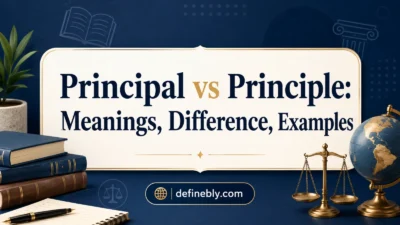
Commonly Confused Words8 Min Read Adrian WellsonMay 19, 2026 Principal Vs. Principle: What’s The Difference? Principal means a school leader, the main or most important thing, or the original amount of money in a loan or investment. Principle means a…
Commonly Confused Words6 Min Read Adrian WellsonMay 19, 2026 Stationary Vs. Stationery: What’s The Difference? Stationary means still, fixed, or not moving. Stationery means writing supplies, such as paper, envelopes, pens, notebooks, cards, and…
Commonly Confused Words5 Min Read Adrian WellsonMay 18, 2026 Desert Vs. Dessert: What’s The Difference? Desert means a dry region with little rain, or it can mean to leave someone or something behind. Dessert means a sweet course usually served…
Commonly Confused Words8 Min Read Adrian WellsonMay 17, 2026 Advice Vs. Advise: Difference, Examples, And Easy Rule Advice is a noun. It means guidance, a suggestion, or a recommendation. Advise is a verb. It means to give guidance, recommend something, or…
Commonly Confused Words8 Min Read Adrian WellsonMay 17, 2026 Who’s Vs. Whose: Difference, Examples, And Easy Rule Who’s and whose sound the same, but they do not mean the same thing. Use who’s when you mean who is or who has. Use whose when you mean…
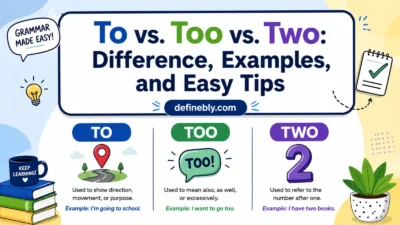
Commonly Confused Words8 Min Read Adrian WellsonMay 17, 2026 To Vs. Too Vs. Two: Difference, Examples, And Easy Tips To, too, and two sound the same, but they have different meanings. Use to for direction, destination, transfer, purpose, or before a verb. Use…