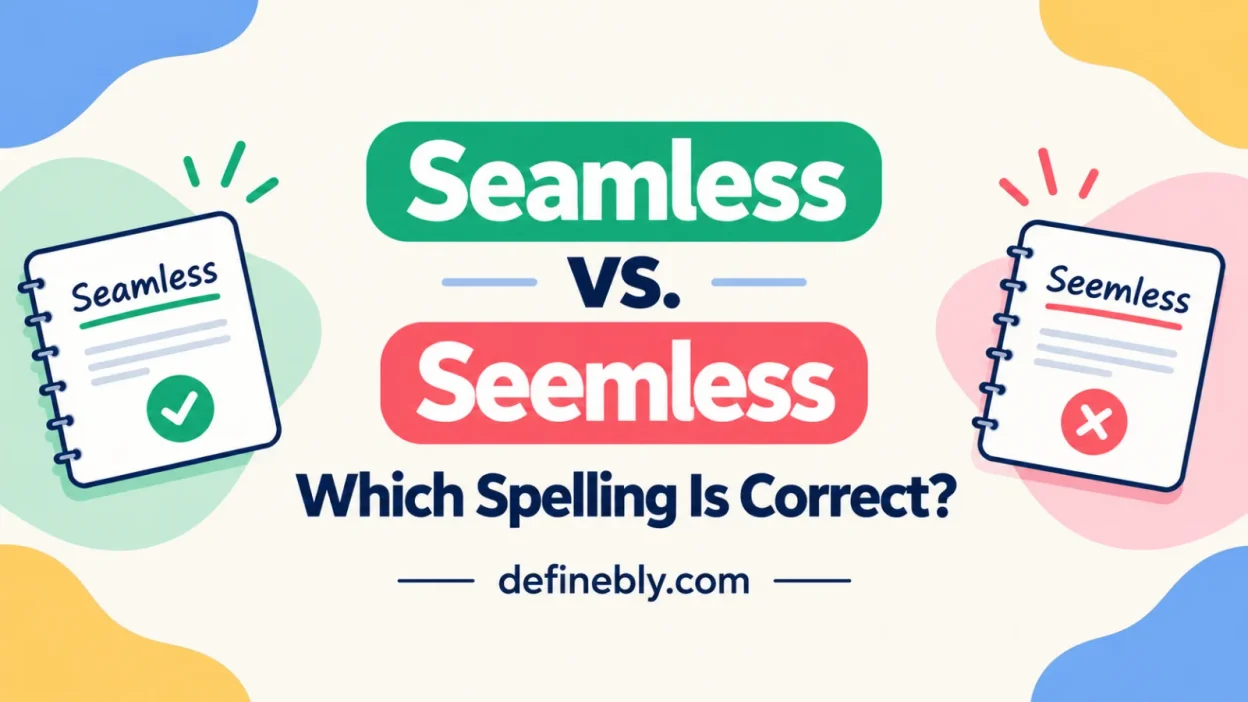
Seamless is the correct spelling in standard English. Seemless is a misspelling. The word seamless means smooth, continuous, or without noticeable interruptions, gaps, or seams.
For example: The new software provides a seamless user experience.
If you are unsure whether to write seamless or seemless, remember that the correct word contains “sea”, not “see.”
Quick Answer: Seamless or Seemless?
- Seamless: Correct spelling. It means smooth, continuous, or without visible seams or interruptions.
- Seemless: Incorrect spelling in standard English.
Correct: The team created a seamless transition between the two systems.
Incorrect: The team created a seemless transition between the two systems.
Use seamless in academic, professional, and everyday writing.
What Does Seamless Mean?
Seamless is an adjective that describes something without visible seams, gaps, or disruptions. It can refer to a physical object that has no noticeable joins or to an experience or process that feels smooth and uninterrupted.
The word has two common uses:
- Literal meaning: Made without visible seams or joins.
- Figurative meaning: Happening smoothly, without noticeable interruptions or difficulties.
Examples of Seamless in a Sentence
- The designer created a seamless dress with no visible stitching.
- The app offers a seamless way to transfer files between devices.
- The company worked to ensure a seamless transition to the new system.
- Their communication made the collaboration feel seamless.
- The hotel provided a seamless check-in experience.
In each example, seamless describes something that appears continuous, connected, or smooth.
Why Is Seamless Correct and Seemless Incorrect?
The correct spelling comes from the word seam, which refers to a line where two pieces of material are joined.
Adding the suffix -less, meaning “without,” creates seamless:
Seam + less = seamless
The resulting word literally means “without seams.” Its figurative meaning developed to describe things that work together smoothly or without interruption.
The spelling seemless incorrectly substitutes seem for seam. Although seem is a real English word meaning “to appear,” it does not form the standard spelling of this adjective.
Seamless vs. Seemless: Key Differences
| Feature | Seamless | Seemless |
|---|---|---|
| Spelling status | Correct | Incorrect |
| Part of speech | Adjective | Not a standard spelling of this word |
| Root word | Seam | Seem |
| Meaning | Without seams or interruptions | No established standard meaning in this context |
| Example | A seamless process | Incorrect spelling |
The main difference is the vowel spelling: seamless contains ea, while seemless contains ee.
When Should You Use Seamless?
Use seamless when describing something that has no noticeable joins or that works smoothly without interruptions.
1. Technology and Software
The update provides a seamless connection between the app and the website.
Here, seamless describes a smooth connection between two systems.
2. Business and Customer Service
The support team made the onboarding process seamless.
The word suggests that the process was easy to follow and had few noticeable difficulties.
3. Clothing and Design
She chose seamless underwear for a smooth appearance beneath her dress.
In clothing, seamless can refer to garments made with few or no noticeable seams.
4. Travel and Transportation
The coordinated schedule made the transfer between trains seamless.
Here, the word describes a smooth transition with minimal disruption.
5. Everyday Life
The two events blended into one seamless celebration.
In this sentence, seamless describes a natural, uninterrupted flow from one event to another.
Seamless vs. Seemless: Common Mistakes
The most common mistake is confusing the spelling of seamless with the word seem.
Remember these distinctions:
- Seam: A line where pieces of fabric or other material are joined.
- Seem: To appear or give a particular impression.
- Seamless: Without seams; also smooth or uninterrupted.
- Seemless: An incorrect spelling when seamless is intended.
For example:
- Correct: The website offers a seamless checkout process.
- Correct: The instructions seem clear.
- Incorrect: The website offers a seemless checkout process.
A useful memory trick is to connect seamless with seam. If you mean something without seams or interruptions, use the spelling with ea.
Frequently Asked Questions
Is Seamless or Seemless Correct?
Seamless is correct. Seemless is a misspelling when used to mean smooth, continuous, or without seams.
What Does Seamless Mean?
Seamless means without visible seams or joins. It can also describe a smooth process, transition, or experience without noticeable interruptions.
Why Is Seamless Spelled With EA?
The word comes from seam, meaning a line where materials are joined, and the suffix -less, meaning “without.” Together, they form seamless.
Is Seemless a Real Word?
Seemless is not a standard English spelling of the adjective seamless. In ordinary writing, use seamless instead.
How Do You Use Seamless in a Sentence?
You can write: “The new payment system provides a seamless checkout experience.” In this sentence, seamless means smooth and uninterrupted.
What Is the Difference Between Seam and Seem?
Seam refers to a join between pieces of material. Seem means to appear or give a particular impression. For example, “The seam is visible” and “The solution seems simple.”
Final Verdict: Seamless vs. Seemless
Seamless is correct; seemless is incorrect. Use seamless to describe something without visible seams or something that works smoothly without interruptions.
Remember the formula seam + less = seamless to avoid this common spelling mistake in American English.