
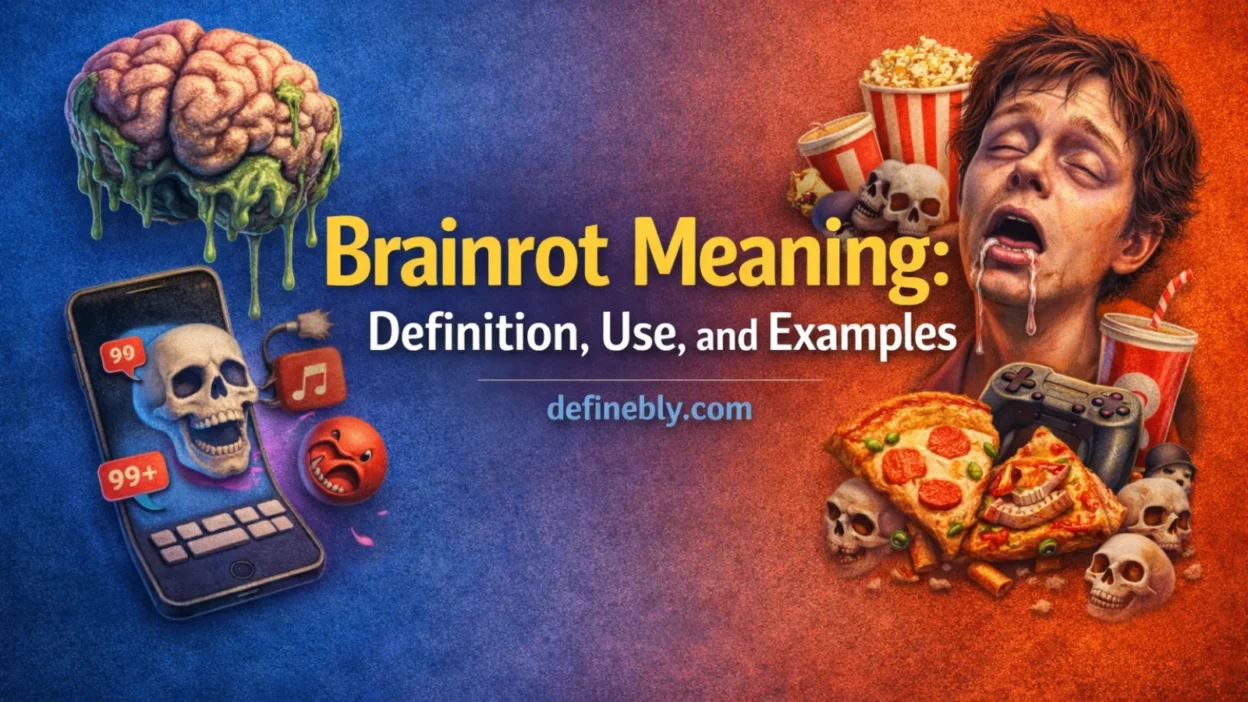
“Brainrot” is a popular slang term you’ll see in memes, comments, and short videos. It’s often used to describe how certain content affects your mind.
The meaning is simple, but it can be used in a few different ways.
Quick Answer
“Brainrot” means being so obsessed with or exposed to certain content that it takes over your thoughts—often in a funny or exaggerated way.
What Does Brainrot Mean In Slang?
In slang, “brainrot” describes a mental state where something—usually online content—gets stuck in your head and won’t go away.
People use it to describe:
- Repeating the same song or sound nonstop
- Watching the same clips or edits over and over
- Thinking constantly about a show, meme, or trend
It doesn’t mean real damage. It’s a joking exaggeration of how consuming or addictive something feels.
Where The Term Comes From
“Brainrot” comes from the literal idea of your brain “rotting” from too much low-effort or repetitive content.
It became popular through:
- TikTok trends and sounds
- Meme culture and edits
- Short-form video platforms
As content became faster and more repetitive, the term evolved into a way to describe mental overload from endless scrolling.
Why “Brainrot” Is So Popular Now
The rise of brainrot is closely tied to how people consume content today.
Key reasons:
- Short-Form Videos: Quick, looping clips are easy to rewatch
- Algorithm Feeds: Platforms keep showing similar content
- Repetition: Sounds, memes, and edits repeat constantly
- Low-Effort Entertainment: Easy-to-watch content dominates
This creates a loop where content sticks in your head—what people call “brainrot.”
Types Of Brainrot People Talk About
“Brainrot” isn’t just one thing. It shows up in different ways:
Music Brainrot
- Playing the same song or sound repeatedly
- Catchy audio stuck in your head all day
Example:
“I have brainrot from that song—it won’t leave my head.”
Meme Brainrot
- Repeating jokes, phrases, or viral clips
- Thinking in memes or references
Example:
“That meme gave me full brainrot.”
Fandom Brainrot
- Constantly thinking about a show, character, or celebrity
- Watching edits and content nonstop
Example:
“I’ve got brainrot for that series right now.”
Scrolling Brainrot
- Endless scrolling without focus
- Consuming random, repetitive content
Example:
“TikTok brainrot hit me today—I scrolled for hours.”
Tone, Context, And What It Really Implies
“Brainrot” is usually self-aware and humorous, but tone matters.
Tone Breakdown
| Tone | Meaning |
|---|---|
| Playful | Enjoying something a lot |
| Neutral | Describing heavy content consumption |
| Negative | Calling content mindless or low quality |
Most people use it jokingly about themselves, not seriously.
Brainrot Vs Similar Terms
| Term | Meaning | Key Difference |
|---|---|---|
| Brainrot | Content stuck in your head | Focus on repetition and overload |
| Obsessed | Strong interest in something | Broader and more serious |
| Addicted (slang) | Can’t stop doing something | More intense wording |
| Hyperfixation | Deep focus on a topic | More psychological and specific |
| Chronically Online | Always on the internet | Describes behavior, not mental effect |
“Brainrot” stands out because it emphasizes looping, repetitive content taking over your thoughts.
How People Use “Brainrot” In Real Life
You’ll mostly see it in casual, online conversations.
Common uses:
- “I’ve got brainrot from that edit.”
- “This song is pure brainrot.”
- “I can’t stop watching these clips—brainrot.”
- “That trend gave everyone brainrot.”
- “My brain is fried from scrolling—full brainrot.”
It’s often used quickly, like a reaction.
When You Should (And Shouldn’t) Use It
Use It When:
- Talking casually with friends
- Reacting to memes or trends
- Describing your own habits humorously
Avoid It When:
- In professional or formal settings
- Discussing real mental health issues
- Criticizing someone’s interests harshly
It works best as light, self-aware slang.
Is Brainrot Harmful Or Just A Joke?
Most of the time, it’s just a joke.
However, it points to real habits:
- Spending too much time scrolling
- Consuming repetitive content
- Struggling to focus
So while “brainrot” is playful, it reflects how modern content can affect attention.
FAQs
What does “I have brainrot” mean?
It means you can’t stop thinking about or consuming something, usually in a fun or exaggerated way.
Is brainrot a bad thing?
Not usually. It’s mostly a joke, but it can hint at overconsumption of content.
What is brainrot content?
Content that is repetitive, catchy, or easy to watch over and over—like memes, edits, or looping videos.
Why do people say brainrot?
People use it to describe how certain content sticks in their mind due to repetition and constant exposure.
Conclusion
“Brainrot” means being mentally stuck on repetitive or addictive content—but it’s usually said as a joke.
It reflects how modern platforms encourage constant scrolling, looping, and repetition. While it’s often harmless, it also highlights how easily content can take over your attention.
Understanding the term helps you recognize when it’s just fun—and when it might reflect deeper habits.