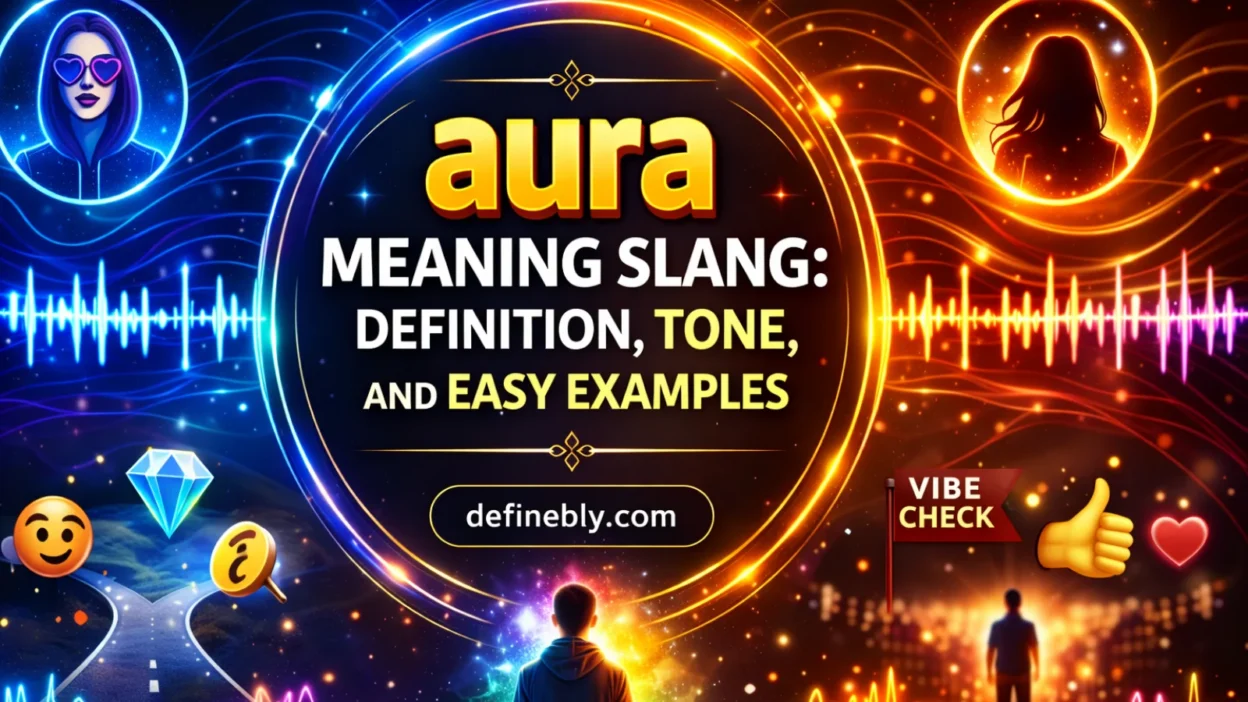
If you are asking about aura in slang, the basic meaning is simple: it means someone’s cool factor, presence, or stylish confidence. In online talk, a person with aura gives off star power, swagger, or a strong vibe.
Quick Answer
Aura in slang means coolness, presence, charisma, or stylish swagger. People also use it in phrases like aura points, where someone gains points for doing something impressive and loses points for doing something embarrassing.
If you are asking what aura means in slang, the simple answer is this: it means a person’s cool factor, presence, or natural social magnetism. In today’s online slang, someone with aura comes across as confident, admired, stylish, or effortlessly impressive. The usual pronunciation is OR-uh.
The slang sense is newer and more specific than the traditional dictionary meaning. Standard dictionaries still define aura as a feeling, quality, or atmosphere that seems to surround a person or place. The slang version keeps that basic idea, but narrows it into something closer to swagger, charisma, star power, and social presence.
What Aura Means In Slang
In slang, aura is the quality that makes someone seem naturally cool, respected, smooth, or hard to ignore. When people say, “He has aura,” they usually do not mean literal energy fields or mystical vibes. They mean the person carries themselves in a way that creates admiration or attention without seeming to try too hard.
A person can have aura because of confidence, composure, timing, style, talent, or the way they handle social moments. That is why the term shows up so often in sports clips, celebrity talk, TikTok jokes, and group chats.
Standard Meaning Vs. Slang Meaning
The older meaning of aura is broad. It can describe the atmosphere around a place, the feeling someone gives off, or a distinctive quality that surrounds a person or thing. The slang meaning takes that same foundation and pushes it toward coolness, charisma, and social impact.
That is why the slang feels intuitive. A “superstar aura” in the standard sense already sounds close to what online users now mean when they say a public figure has aura. The internet simply made the word sharper, funnier, and more competitive.
Where People Use It
You will see slang aura most often in social media captions, TikTok comments, memes, sports talk, and casual conversation. It is especially common when people are reacting to someone doing something impressive, smooth, awkward, or embarrassing.
In sports, people may say a player has aura when they look calm, dominant, or unusually commanding. Online, the same word gets used for outfits, entrances, jokes, body language, and random social wins or fails.
Tone: Positive, Negative, Or Sarcastic
Most of the time, aura is positive. Saying someone has aura is usually a compliment. It suggests confidence, style, charisma, or that hard-to-explain quality that makes people notice them.
But the term also has a sarcastic side. Phrases like negative aura or -100 aura are usually jokes about someone looking awkward, trying too hard, or having an embarrassing moment in public. In that sense, the slang can be playful, teasing, or mildly mocking depending on context.
How Aura Points Work
One reason the term spread so fast is the idea of aura points. These are fake, flexible points people assign to actions that look cool or uncool. Smooth comeback? Gain points. Trip on the stairs in front of everyone? Lose points.
The important thing to understand is that there is no official formula. No one starts with a fixed number, and there is no real scoring system to follow. The numbers are part of the joke. The humor comes from exaggerating how much a tiny social win or fail changed someone’s “aura.”
Related Terms: Aura Farming And Auramaxxing
As the slang evolved, it created related terms. Aura farming usually means doing something in a way that looks deliberately cool, effortless, or socially impressive, especially when it is visible online.
Auramaxxing is a broader self-improvement term built around trying to boost your presence, confidence, appearance, or overall vibe. In online use, it often overlaps with style upgrades, self-care, social confidence, and trying to seem more magnetic.
Aura Vs. Vibe, Charisma, And Rizz
These words overlap, but they are not identical. Vibe is broader and can describe almost any feeling or mood. Charisma sounds more traditional and formal. Rizz usually points more directly to charm, flirting, or social game. Aura sits somewhere between presence, swagger, and the overall effect a person has before they even speak.
That is why someone can have aura without being loud, funny, or flirtatious. The word often suggests quiet impact as much as active charm.
Example Sentences
He walked into the room late, said almost nothing, and still had aura.
That outfit gave her at least +500 aura.
Trying to look mysterious and then dropping your phone is -100 aura.
The captain has real aura when the match gets tense.
Stop forcing it. Real aura usually looks natural.
When Not To Use It
This slang sense of aura works best in casual speech, pop-culture writing, memes, and informal online conversation. It usually sounds out of place in academic writing, business emails, formal presentations, or job interviews. That is because the current slang meaning belongs to internet culture and youth-driven social language, not formal standard usage.
You should also be careful using it to embarrass people. Among friends, aura jokes can be light and funny. In the wrong setting, though, calling out someone’s “negative aura” can easily sound mean or dismissive.
Why The Term Became So Popular
Aura works well online because it turns social presence into something easy to joke about, rate, and exaggerate. It is short, flexible, visual, and perfect for meme culture. It also connects neatly to sports clips, celebrity edits, awkward social stories, and TikTok-style commentary.
In other words, the term succeeded because it gives people a fast way to describe the difference between someone who feels effortlessly impressive and someone who just had a painfully awkward moment.
FAQ
What does aura mean in slang?
In slang, aura means someone’s cool factor, presence, charisma, or stylish confidence. It usually suggests that a person feels naturally impressive or socially magnetic.
What does it mean if someone says you have aura?
It usually means they see you as confident, cool, smooth, or memorable. In most cases, it is a compliment.
What does -100 aura mean?
It is a joking way to say someone did something awkward, embarrassing, or uncool. The number is exaggerated on purpose and is part of the meme.
Are aura points real?
No. Aura points are imaginary social points. People use them for humor, teasing, and online commentary, not as a real scoring system.
Is aura the same as rizz?
Not exactly. Rizz usually focuses more on charm or flirtation, while aura is broader and describes a person’s overall presence or effect on others.
Is aura slang rude?
Usually no. It is often playful or complimentary. But phrases like negative aura can sound mocking if they are used to embarrass someone.
In slang, aura means the kind of confidence, presence, and coolness that makes someone stand out. It is usually praise, sometimes sarcasm, and often a joke. The plain-English version is simple: if someone has aura, they come across as effortlessly impressive.
Conclusion
In slang, aura means cool factor, presence, or stylish swagger. It is usually a compliment, but it can turn sarcastic when people talk about losing aura points. The safest plain-English version is this: aura in slang means the kind of confidence and presence that makes someone seem effortlessly cool.