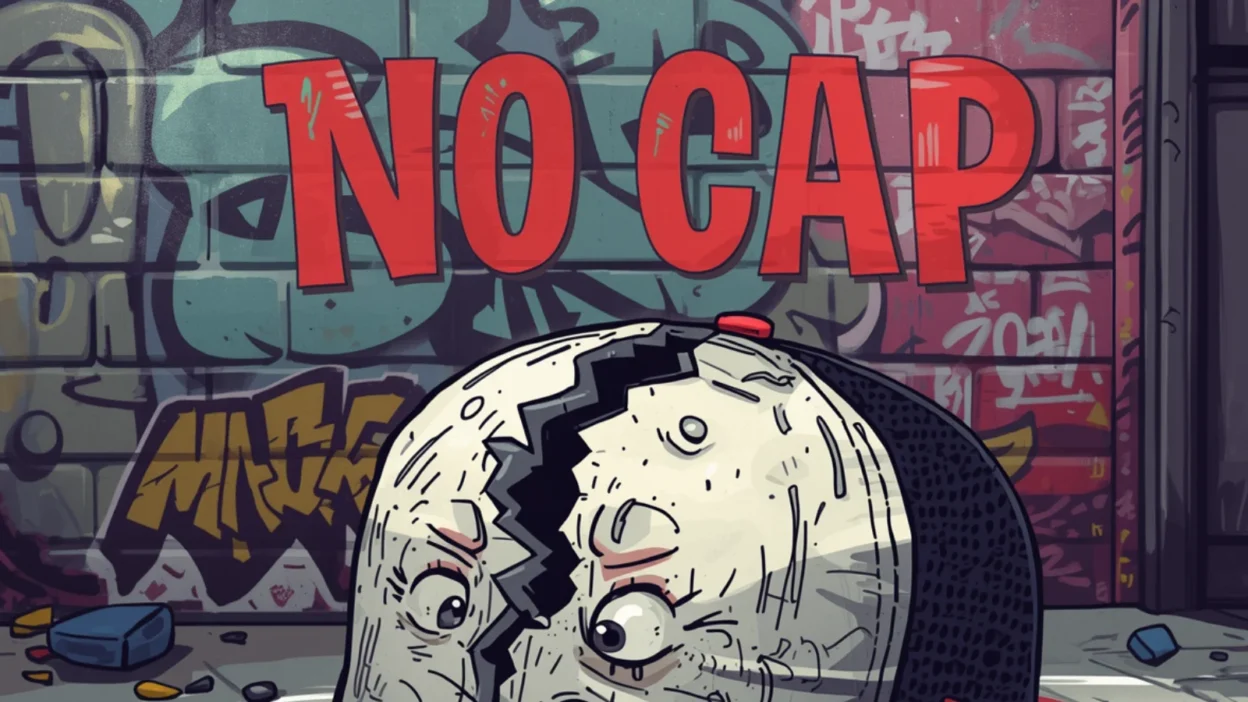
If you’ve seen a comment like “That was amazing, no cap!”, it’s not about a hat.
In modern slang, no cap signals honesty, emphasizing that the speaker is telling the truth or being sincere. It’s widely used in texting, social media, and casual conversation, especially among younger audiences.
Quick Answer
In slang:
- No cap = “no lie” or “for real”
- Used to stress truthfulness or sincerity in statements
What Does No Cap Mean In Slang?
No cap is an informal way to indicate that you are being genuine and not exaggerating.
It’s often added to statements that might otherwise seem too bold or unbelievable. Since cap means a lie or exaggeration, no cap signals that everything said is true.
Examples:
- “That concert was incredible, no cap.”
- “I finished all my assignments in one night, no cap.”
- “This pizza is amazing, no cap.”
Origin And Cultural Background
“No cap” comes from African American Vernacular English (AAVE) and gained popularity in hip-hop culture during the 2010s.
- Hip-hop artists frequently used it to call out lies or emphasize truth.
- Social media platforms like TikTok, X, Instagram, and online gaming communities helped it spread among younger generations.
- Its simplicity and clarity make it ideal for quick, emphatic communication.
Tone, Context, And Nuance
“No cap” is casual, friendly, and emphasizes honesty, but tone matters.
Tone Spectrum
| Tone | Meaning | Example |
|---|---|---|
| Positive/Sincere | Genuine truth | “That movie was amazing, no cap.” |
| Casual | Light emphasis | “This pizza is fire, no cap.” |
| Playful | Joking among friends | “I can eat ten burgers, no cap.” |
| Emphatic | Strong assertion | “I’m the best player on this team, no cap fr.” |
Key Insight: Context and tone determine whether “no cap” is lighthearted, emphatic, or serious.
Where And How People Use No Cap
- Text messages and group chats
- Social media captions, comments, and replies (TikTok, X, Instagram)
- Gaming chats and forums
- Casual spoken conversation
It’s often used to strengthen bold statements or clarify honesty.
Example Conversation:
- Friend 1: “I finished the game without losing a life.”
- Friend 2: “No cap?”
- Friend 1: “No cap, I really did!”
Common Variations
- No cap fr: Really telling the truth
- Fr fr: For real, for real
- Cap: The opposite — a lie or exaggeration
- Capping: Lying or exaggerating
No Cap Vs Related Slang Terms
| Slang | Meaning | Difference |
|---|---|---|
| No cap | Truth, honesty | Emphasizes sincerity |
| Cap | Lie or exaggeration | Opposite of no cap |
| Fr fr | Really, seriously | Less confrontational, emphasizes truth |
| Facts | Agreement with truth | Confirms statement rather than calling a lie |
| Say less | Understanding or agreement | Acknowledges without judgment |
When Not To Use No Cap
Avoid in:
- Professional or academic writing
- Serious conversations where clarity matters
- Settings where slang may confuse listeners
Instead, use “I’m serious” or “truthfully” for clarity.
FAQs
What does no cap mean?
It means you are being truthful or sincere.
Can no cap be rude?
Not usually. Tone can affect how it’s received, but it’s typically casual.
What is the opposite of no cap?
Cap — meaning a lie or exaggeration.
Where is no cap used most?
In social media, texting, and casual conversations.
How do you respond to no cap?
You can acknowledge with phrases like “fr fr,” “facts,” or simply agree with context.
Conclusion
No cap is a popular slang term used to emphasize honesty or seriousness in casual conversations.
Understanding tone, context, and platform use ensures you interpret it correctly and respond naturally, whether you’re texting friends, commenting online, or reacting to a bold statement.